The basics
What is DTF printing?
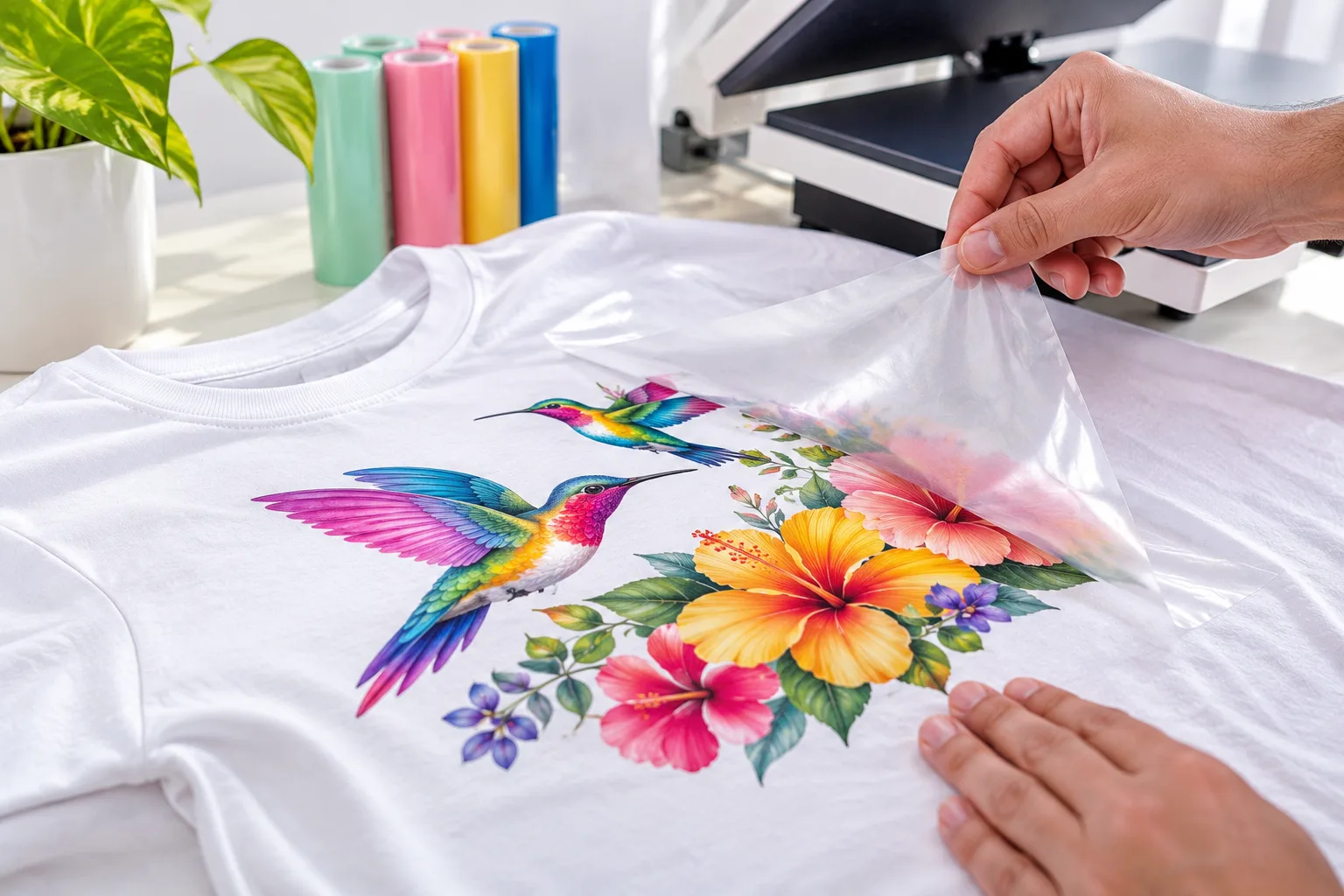
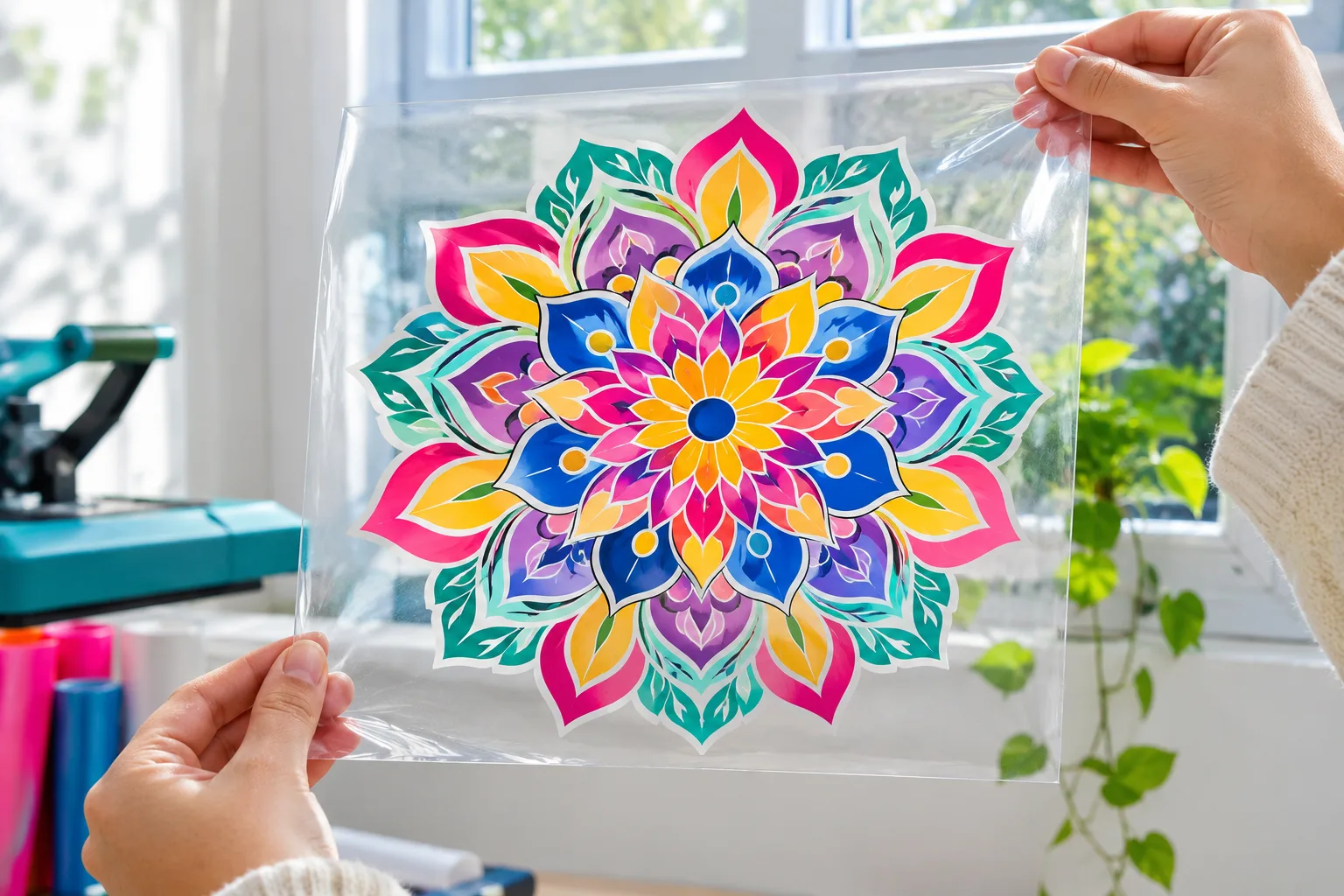
DTF (Direct-to-Film) is a heat-transfer printing method. Instead of printing straight onto the garment, your design is printed onto a special PET film using CMYK inks plus a layer of white ink. A hot-melt adhesive powder is then applied and cured, creating a transfer that can be heat-pressed onto almost any fabric.
Because the white underbase sits behind the colours, DTF prints stay bright on black and coloured garments. And because no pre-treatment or screens are needed, it's economical even for a single piece.
The process
How DTF printing works
Artwork
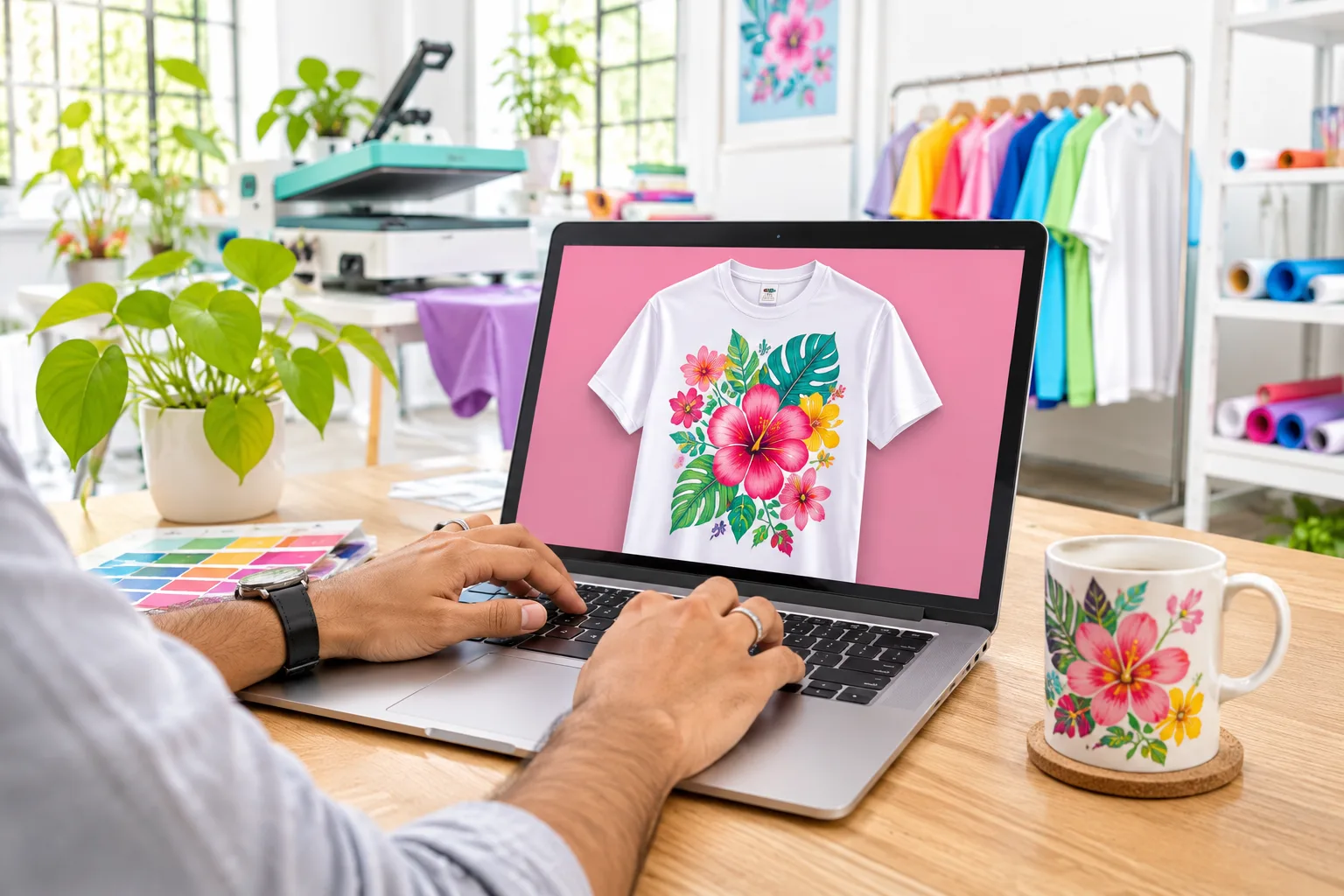
The design is prepared as a high-resolution PNG with a transparent background.
Print on film
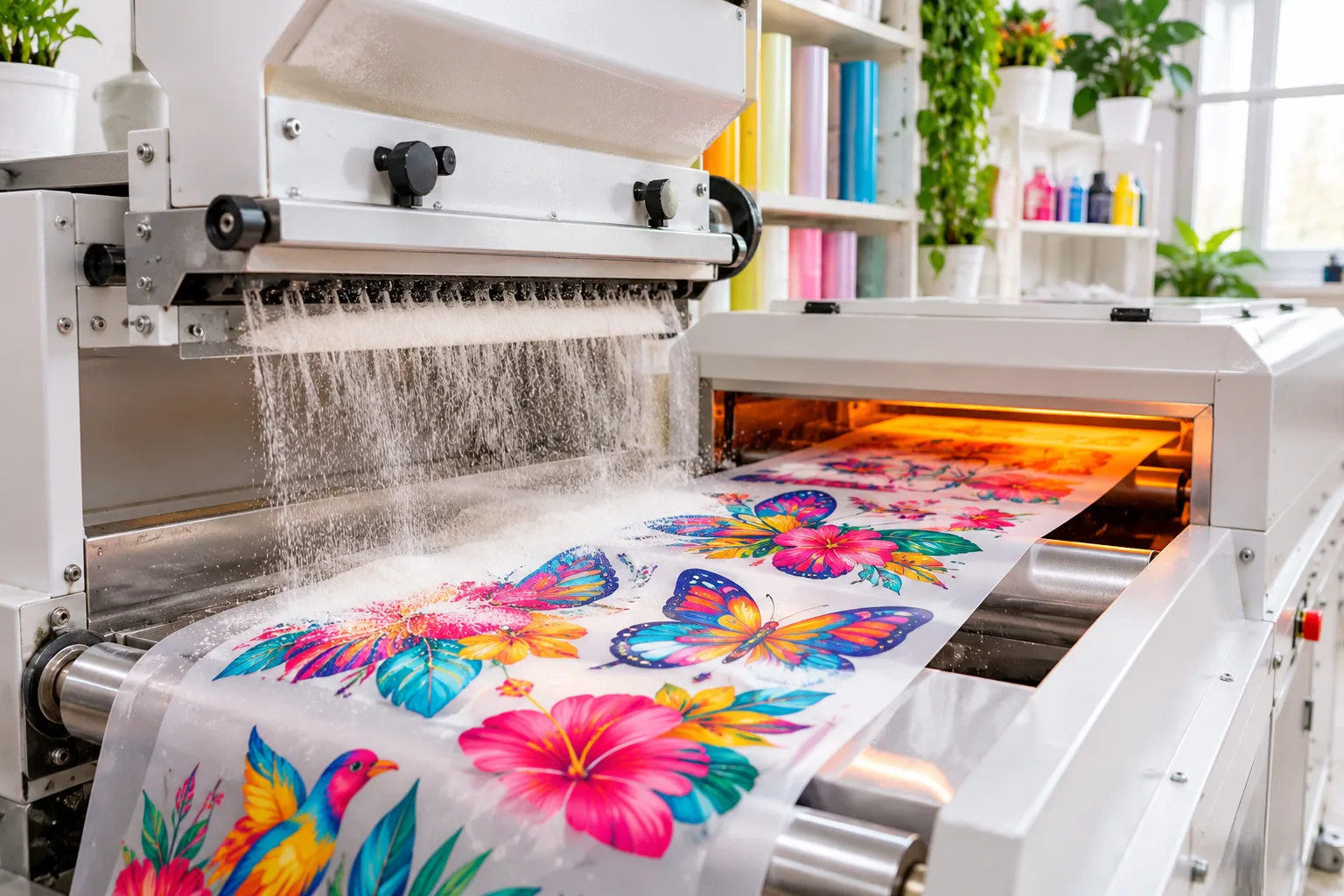
A DTF printer lays down CMYK colour, then a white ink layer, onto PET film.
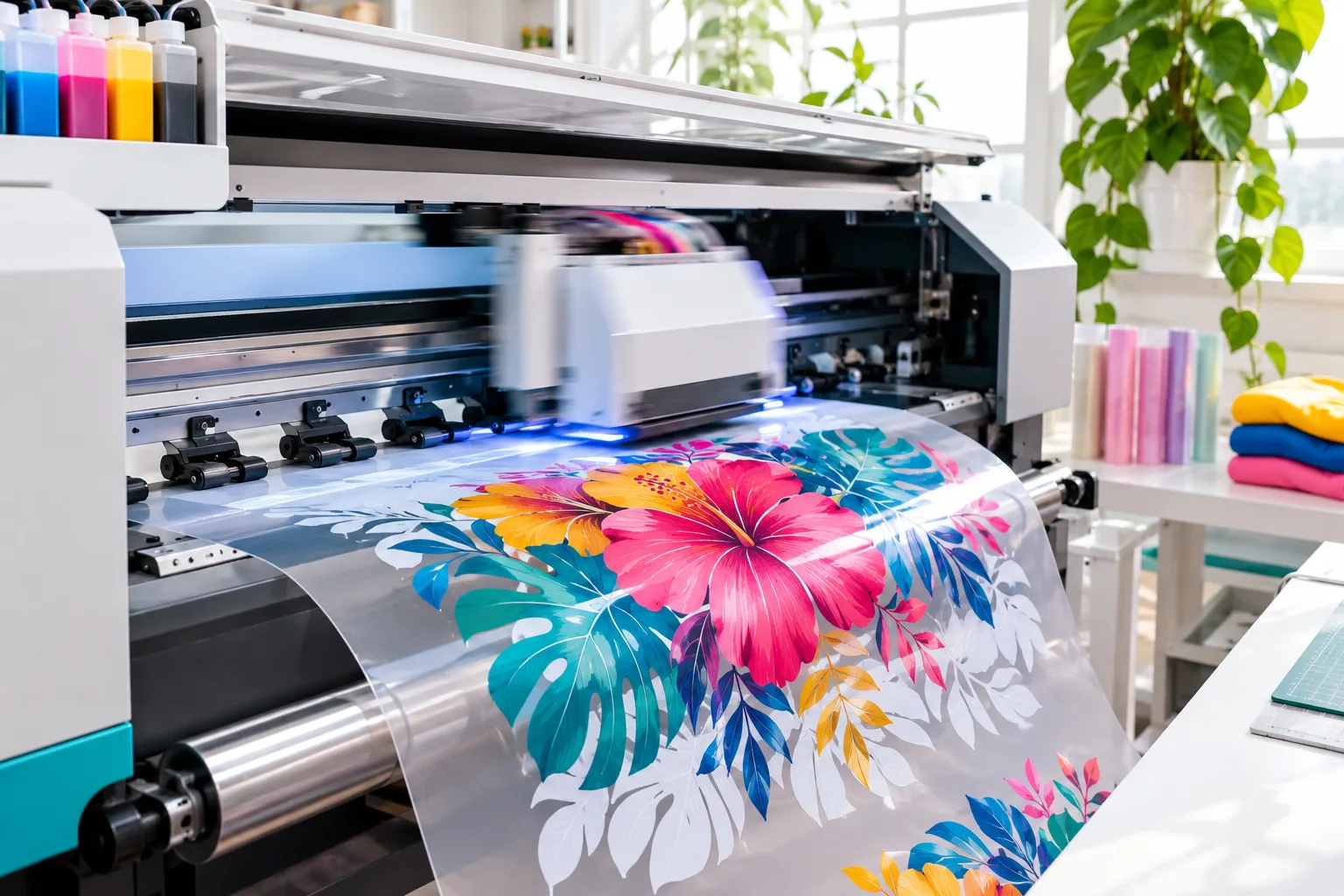
Powder & cure
Adhesive powder sticks to the wet ink and is melted in a curing oven.
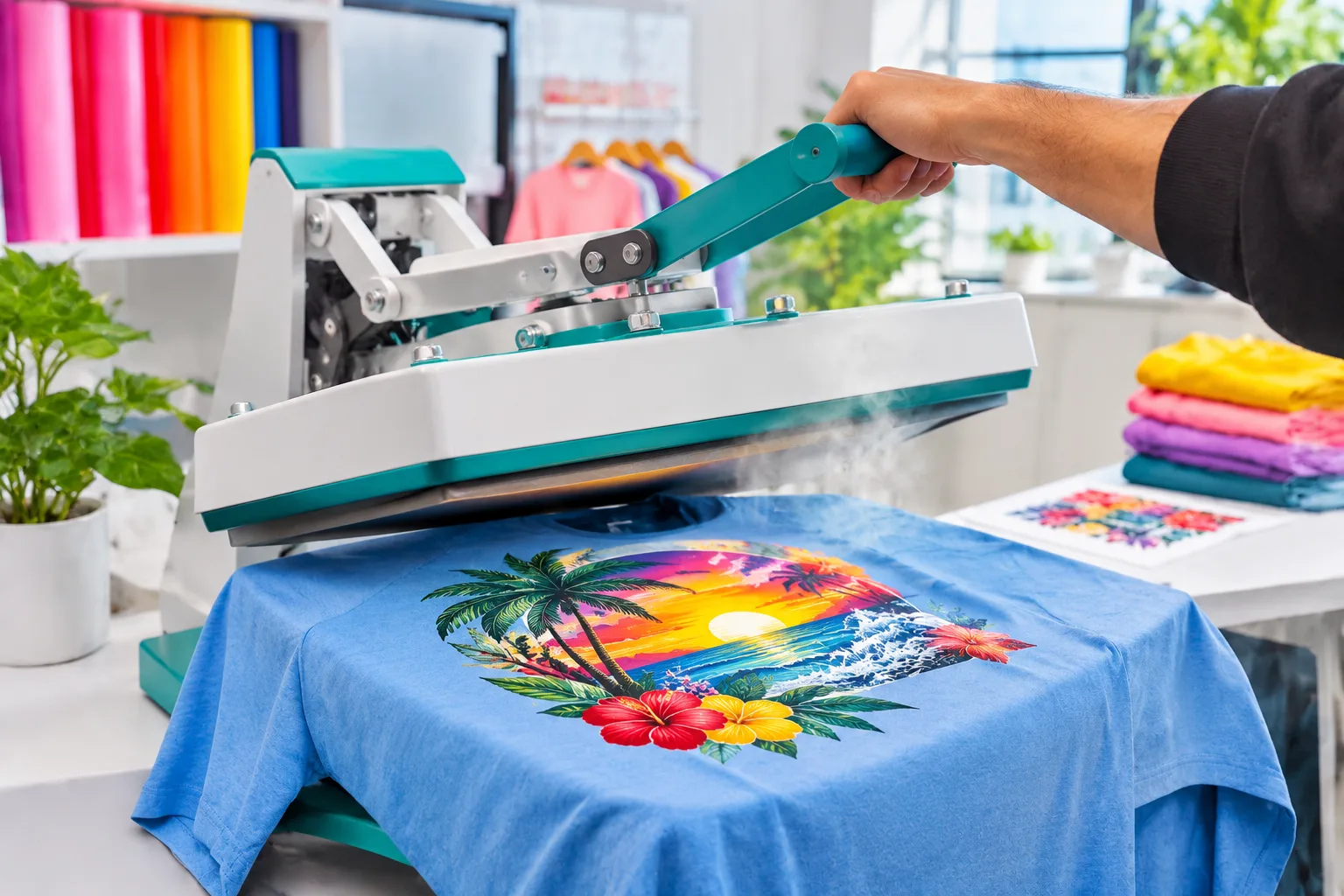
Heat press
The transfer is pressed onto fabric and the film is peeled away.
Compare
DTF vs DTG, screen printing, sublimation & vinyl
DTG (Direct-to-Garment)
Prints straight onto fabric. Great detail on cotton, but needs pre-treatment for dark garments and struggles on polyester.
Screen printing
Ink pushed through a mesh screen per colour. Very durable and cheap at high volume, but setup costs make small runs expensive.
Sublimation
Dye bonds into polyester fibres. Extremely vivid, but only works on light-coloured, high-polyester fabrics.
Vinyl (HTV)
Coloured vinyl is cut and pressed. Good for names and numbers, but limited to simple shapes and few colours.
| DTF | DTG | Screen Print | Sublimation | Vinyl (HTV) | |
|---|---|---|---|---|---|
| Works on cotton | |||||
| Works on polyester | |||||
| Dark fabrics | |||||
| Full colour & gradients | |||||
| No minimum order | |||||
| Fine detail |
Great fit Possible, with limits Not suitable
Versatility
Fabrics & products DTF works on
- 100% Cotton
- Polyester
- Poly-cotton blends
- Fleece
- Denim
- Nylon
- Canvas
- Leather & faux leather
- Spandex / Lycra
T-shirts, hoodies, sweatshirts, polos, jerseys, caps, tote bags, aprons, pouches, jackets and more. If it can take heat, it can usually take DTF. Ask us if you're unsure.
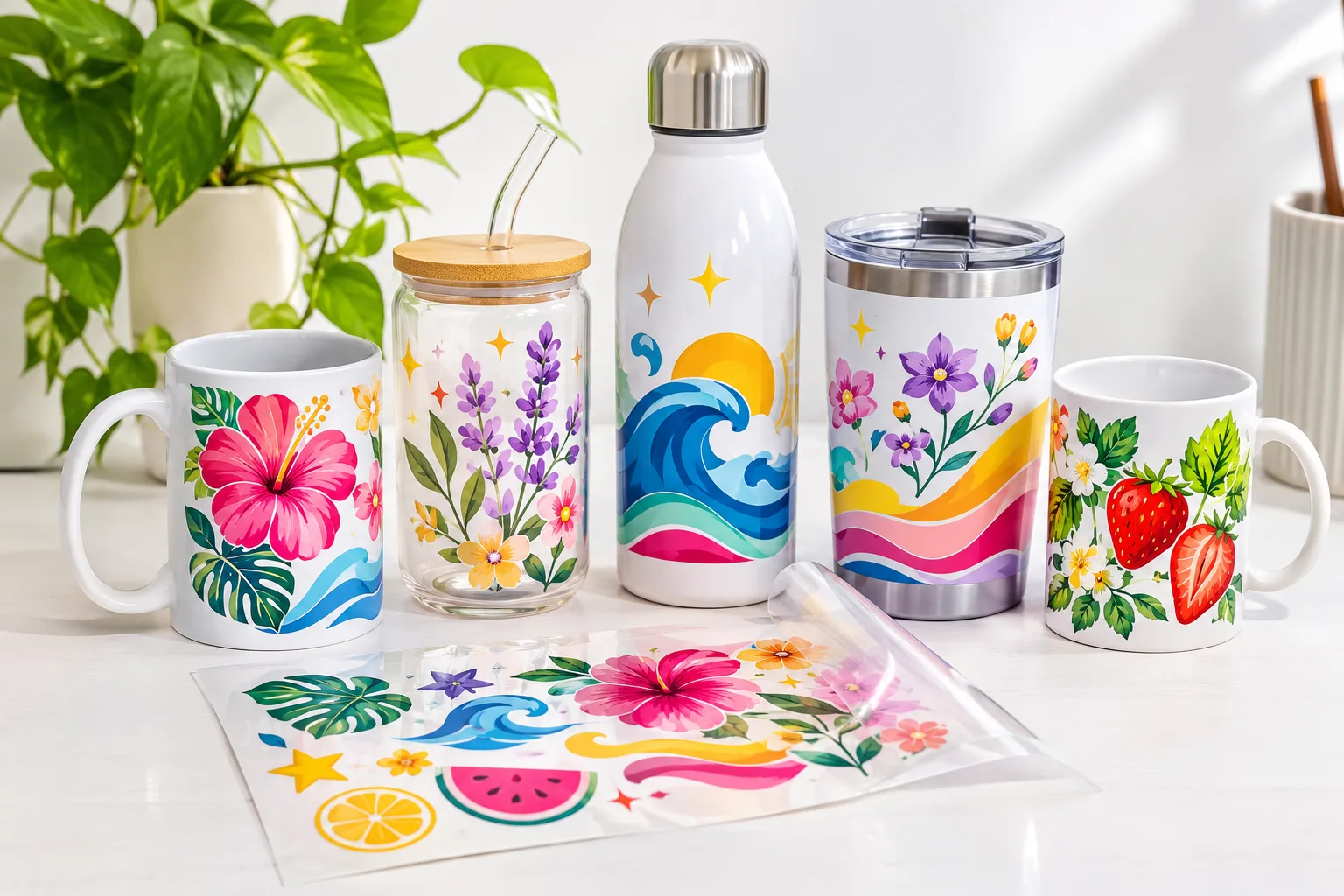
Hard surfaces
DTF vs UV DTF
DTF is for fabric: the transfer uses adhesive powder and is bonded with a heat press.
UV DTF is for hard, smooth surfaces. The design is printed with UV-cured inks onto a two-part film and comes out as a peel-and-stick transfer, so no heat press is needed. Just clean the surface, stick it on, smooth it down and peel away the top film.
- Mugs, tumblers, glass cans & water bottles
- Phone cases, laptops & notebooks
- Glass, metal, acrylic, wood & plastic
- Hand-wash recommended for long life
Size guide
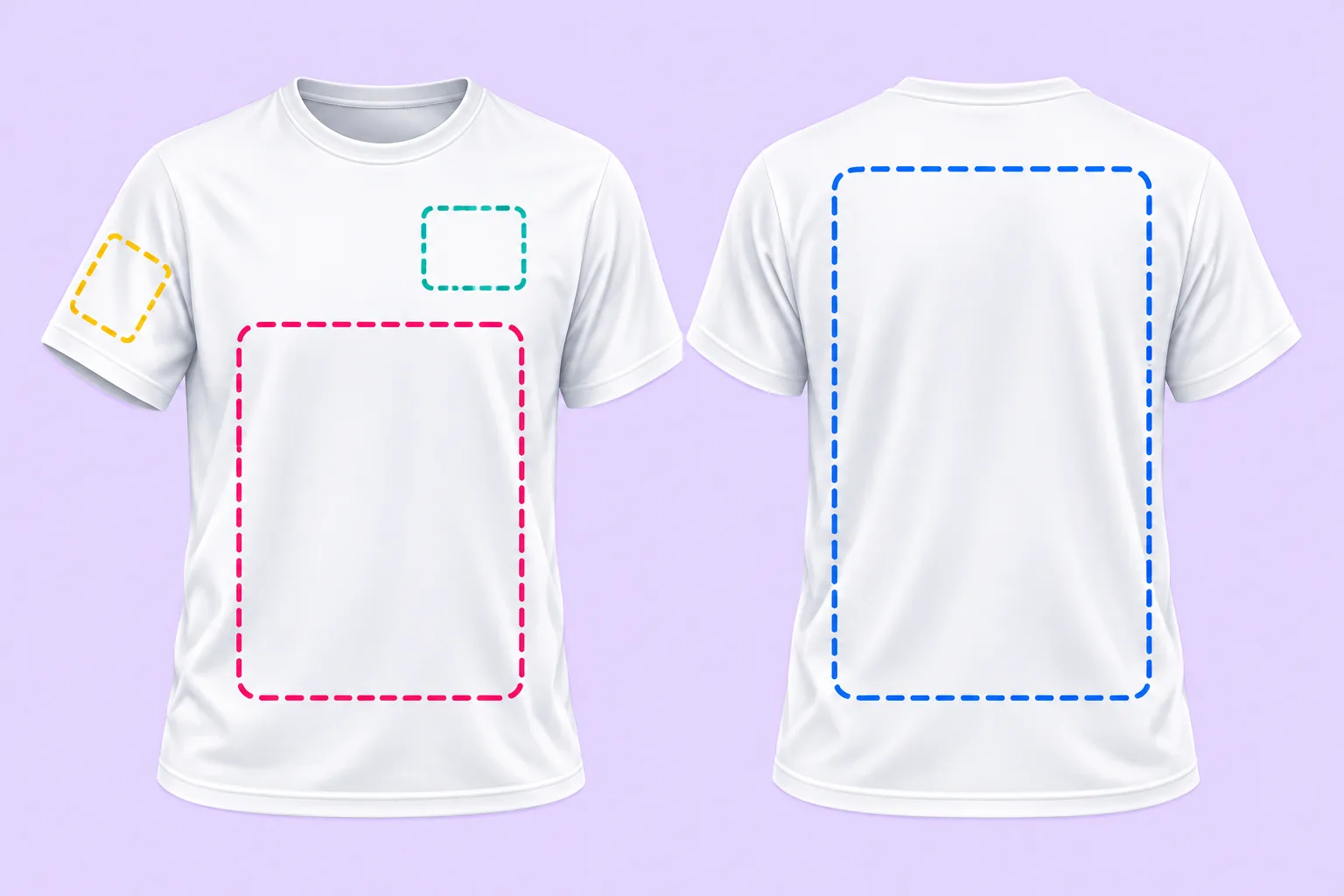
Recommended print sizes
| Placement | Inches | Centimetres |
|---|---|---|
| Left chest / pocket logo | 3.5" to 4" wide | 9 to 10 cm |
| Adult front (standard) | 10" to 11" wide | 25 to 28 cm |
| Adult full back | 12" × 14" | 30 × 36 cm |
| Youth / kids front | 7" to 9" wide | 18 to 23 cm |
| Sleeve | 3" to 3.5" wide | 7.5 to 9 cm |
| Cap front | 4" × 2" | 10 × 5 cm |
| Tote bag | 10" × 10" | 25 × 25 cm |
Artwork
Preparing your files
PNG with transparency
Use a transparent background. Anything that isn't transparent will be printed.
300 DPI at print size
Design at the actual size you want printed for sharp results.
RGB colour mode
We handle colour conversion; avoid tiny semi-transparent pixels.
No thin hairlines
Keep lines at least 0.5 mm (1.5 pt) thick so they press cleanly.
Application
Heat-pressing guide
General settings for most cotton and blended fabrics. Always follow the instructions supplied with your order and test on a sample first.
Aftercare
Make your print last.
- Wait 24 hours before the first wash.
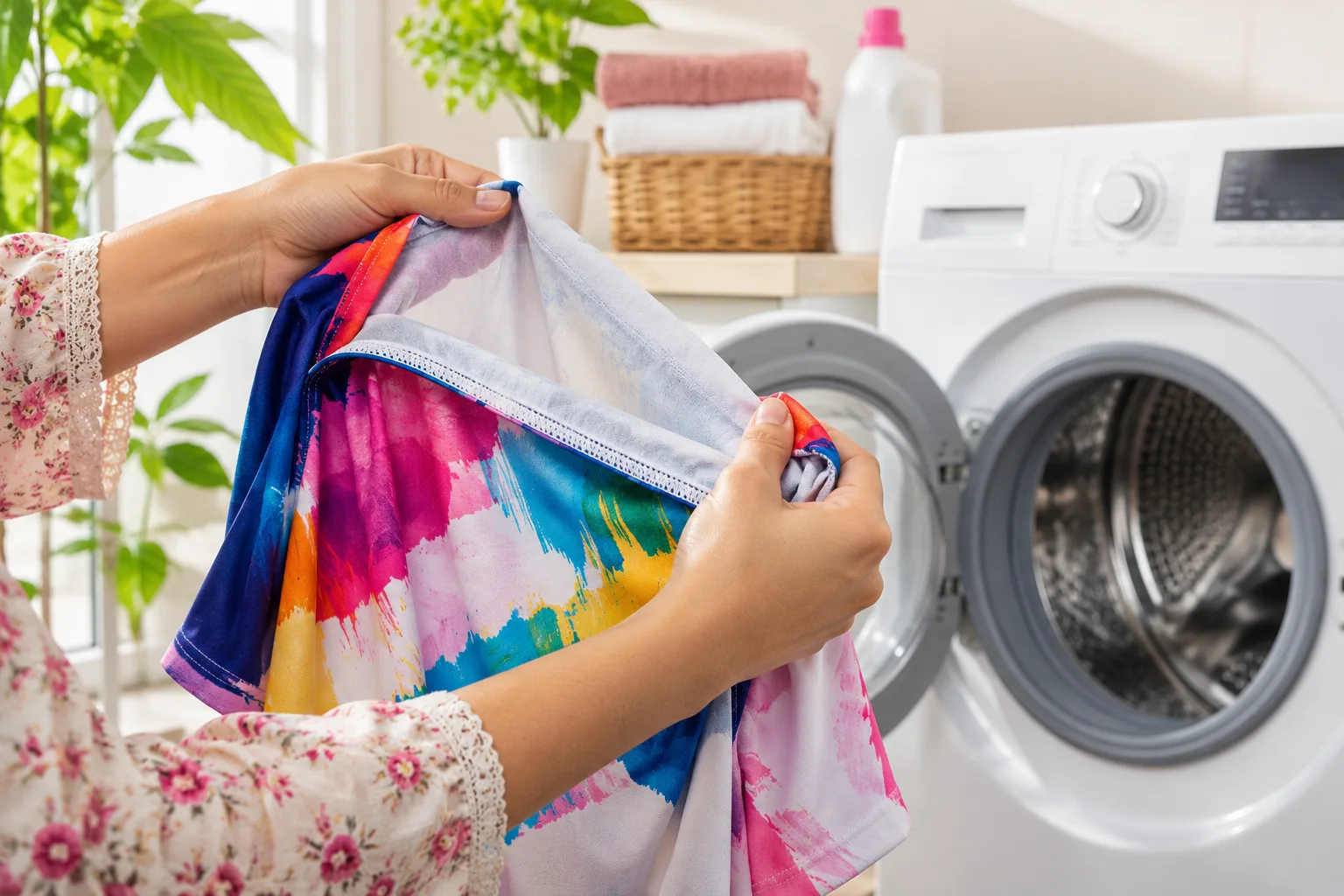
- Turn garments inside out.
- Wash cold or warm (up to 40 °C).
- Mild detergent only, no bleach or fabric softener.
- Tumble dry low or hang dry.
- Never iron directly on the print.
Ready when you are
Got a design?
Let's press it.
Upload your artwork, pick your size and quantity, and we'll send a confirmed quote, usually the same day.